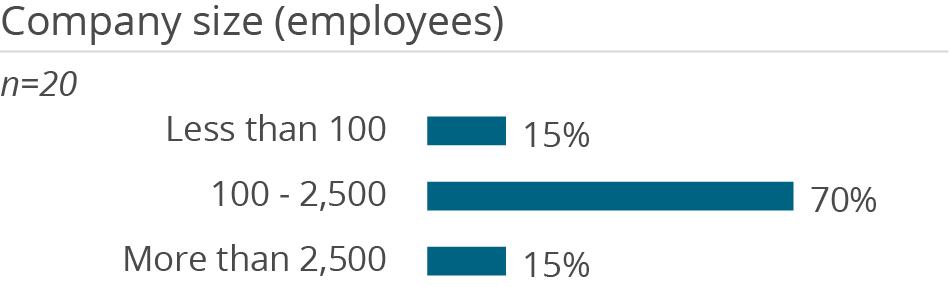
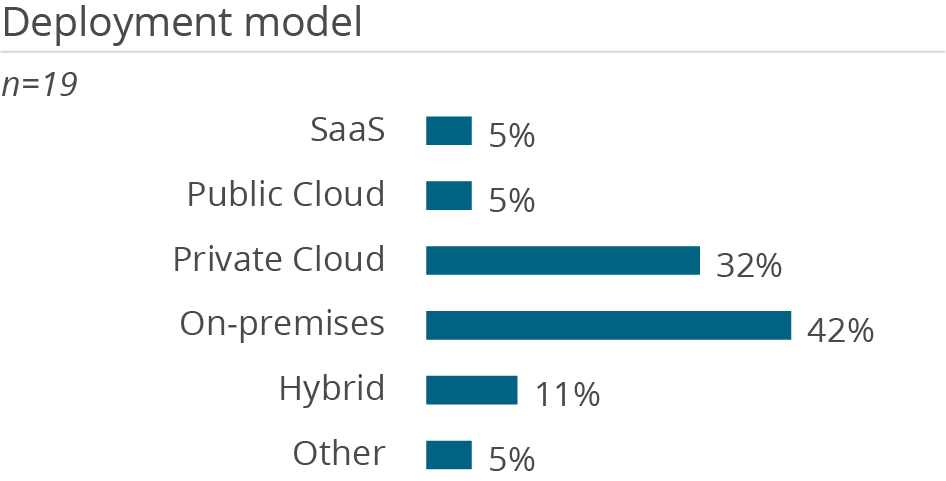
2150 Datavault Builder serves 270 installations across four continents, supported by 50+implementation partners. In 2024, the vendor achieved SOC 2 Type 2 and ISO 27001 certifications, strengthening its enterprise security credentials. As a Data Vault automation specialist expanding into broader data warehouse automation, the company targets customers from mid-market to enterprise, with references including ProSiebenSat1 and C&A. Its Docker-containerized architecture enables on-premises, hybrid, or cloud deployment, including Snowflake Snowpark Container Services. This flexibility addresses the hybrid data and analytics reality many enterprises face today. The vendor is EU and in particular DACH-focused with growing US momentum.
The product automates the full data warehouse development, deployment, and operations cycle to reduce time-to-market, project risk, and maintenance costs. Template-driven workflows support Data Vault, relational, multidimensional, and flat table models, plus data product delivery. Rather than using a proprietary metadata repository, 2150 Datavault Builder integrates logic directly into target databases, positioning itself as a business model driven data warehouse automation solution that generates and executes procedures directly on the database in the target system. Supported platforms span traditional databases (Oracle, Microsoft SQL Server, Exasol, Postgres) and cloud data platforms (Snowflake, Databricks, Google BigQuery, Azure SQL, Synapse/Fabric). DevOps integration includes Git, as well as deployment and orchestration, either natively or via third-party orchestration tools such as UC4, Apache Airflow, and BMC Control-M for scheduling and monitoring. Bi-temporal data processing supports complex finance industry requirements.
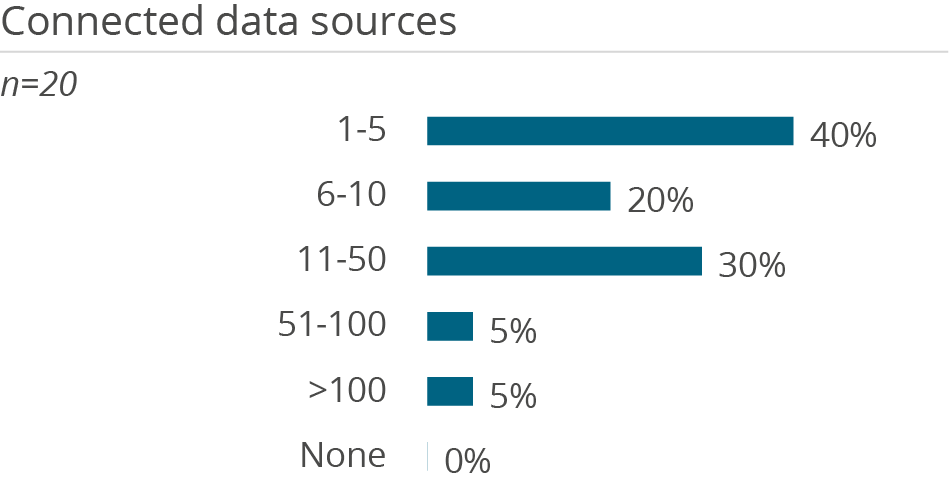
Functionally, the tool consolidates nine capabilities: data modeling, data integration, data quality, data profiling, metadata management and enrichment, database clients, pattern generators, job orchestration, and scheduling and deployment, which can be executed manually or automated via CI/CD pipelines. Datavault Builder provides a decent variety of source connectors. Built-in transparency features include auditing, automated documentation, historization, and data lineage. The guided interface supports structured and standardized development processes.
In The Data Fabric Survey 26, 2150 Datavault Builder ranked first for Customer Satisfaction in both its peer groups (8.9/10), with perfect User Support (10/10) and excellent Product Satisfaction (9.3/10), Time to Market (8.8/10), and Connectivity scores (8.3/10). Purchase drivers are compelling: 95% cite functional capabilities (versus 42% average in the survey), 80% value cost / good price-performance ratio (versus 37%), and 65% are swayed by the tool’s connectivity (versus 57%). Remarkably, 50% report no significant problems, double the average. However, 20% cite “bad performance,” although user feedback suggests UX delays with large models rather than SQL execution issues. Datavault Builder plans to release a new GUI in Q3 2026, enhancing the management of large object volumes, improving usability through intuitive metadata grid layouts, integrating an MCP Server, enabling Single Sign-On (SSO) via Keycloak, and providing enhanced data lineage visualization, among other improvements. Another 20% find it “too difficult for business users.” This highlights the fact that Datavault Builder is a tool built by experts for data warehouse experts.
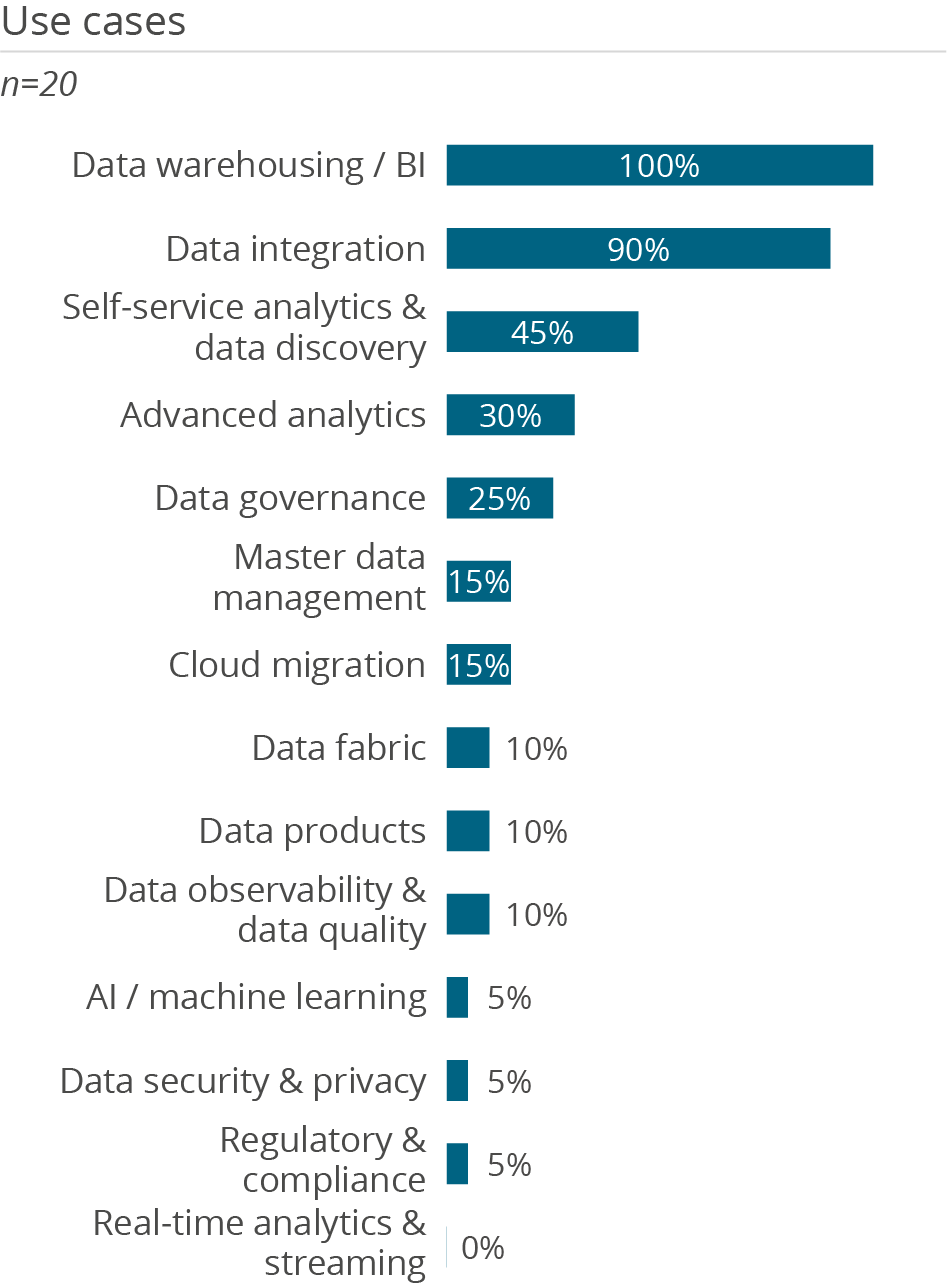
2150 Datavault Builder fits organizations that want to leverage its ability to absorb heterogeneous data sources, ensure full historization, and enable automated refactoring, while empowering focused teams with automation, flexibility, and optimized data structures for BI, AI, and data mesh use cases. The solution is for organizations prioritizing vendor support and rapid deployment. Its strong price-to-value is a particular relevant argument in times of tight data and analytics budgets. Consider alternatives for heavy business user self-service or data engineering beyond warehouses (i.e., scenarios without significant data modeling requirements). Recent certifications and expanded cloud platform support demonstrate vendor maturity.