


Informatica Intelligent Data Management Cloud
What is Informatica Intelligent Data Management Cloud?
Cloud-based platform based on central, AI-supported services for implementing operational and analytical data use cases, e.g. data integration, data quality, master data management, API management, data cataloging, governance and data marketplace
Customer Satisfaction
5.9
★★★★★★★★★★ Rated 5.9 out of 10
User Experience
5.7
★★★★★★★★★★ Rated 5.7 out of 10
Technical Foundation
6.6
★★★★★★★★★★ Rated 6.6 out of 10
Business Value
5.2
★★★★★★★★★★ Rated 5.2 out of 10
About Informatica Intelligent Data Management Cloud
Self-description of the vendor
No vendor self-description available
About BARC Reviews
Would you like to find out more about BARC reviews? Our FAQs answer the most important questions.
References
No data available
Partners
No data available
Informatica Intelligent Data Management Cloud BARC Review & Rating
Provider and product description
Informatica, established in 1993, is a data management suite provider that now operates within Salesforce. The company grew organically and via acquisitions, for example with the purchases of Compact Solutions and GreenBay Technologies in 2020 and Privitar in 2023, before its own acquisition by Salesforce in late 2025. Informatica’s data integration, master data management, governance, data quality, and data sharing products now form part of the Salesforce portfolio. They strengthen the “Data 360” pillar of Salesforce “Agentic Enterprise,” providing real-time context to the Slack productivity software, Customer 360 applications, and agents that Salesforce uses to drive business systems.
Informatica still positions itself as the Switzerland of data management. Its “Intelligent Data Management Cloud” (IDMC) integrates with all three hyperscalers and gorillas such as Databricks, Snowflake, and Oracle. It augments its rich metadata model with wide-ranging connectors to data warehouses, lakehouses, databases, SaaS applications, and so on. Informatica’s CLAIRE AI service automates various aspects of data managment based on metadata intelligence. These services extend a cloud-centric transformation that gained steam after Informatica’s stock offering in 2021.
Informatica also offers a mature data marketplace that supports data products, contracts, and sharing while optimizing the interface for business user accessibility. Informatica’s governance suite includes data quality observability and policy management as well as advanced privacy controls.
More than three quarters (78%) of users buy IDMC for its connectivity to source and target systems, compared with 57% for other vendors. Informatica also tops other vendors for pre-existing relationships (50% vs. 26%), ease of use (44% vs. 27%), roadmap and vision (33% vs. 25%), and proof of concept (33% vs. 15%). However, users also have concerns about Informatica. Most (80%) of them say IDMC is missing key functionality vs. 14% for other vendors, and 50% say it is too difficult to use for business users vs. 19% for others. Additional concerns include pricing model and cost (45% for Informatica vs. 19% for others), lack of integration into workflows/environment (45% vs. 9%), and product inflexibility (30% vs. 8%).
IDMC also has the lowest user rankings for Business Value, Customer Satisfaction, User Experience, and Technical Foundation in all three of its peer groups: Data Engineering Tools, Data Engineering (Big Players), and ETL Tools. The exception is Data Security & Privacy, a critical area for AI innovation, with IDMC ranking near the top in all its peer groups. But taken together, this user feedback indicates that Informatica must sharpen its focus, decide where to win, and potentially rationalize certain product lines. While its rich metadata and AI-driven automation are viable differentiators, those advantages alone cannot keep IDMC competitive in a fast-changing market.
Informatica is best suited for large enterprises with complex, hybrid data estates that require deep connectivity across cloud, on-premises, and SaaS environments. The primary buyers are chief data officers, heads of data engineering, enterprise architects, and governance leaders who need to standardize integration, master data, quality, and privacy controls at scale—and prefer to standardize on a single vendor. Typical use cases include enterprise data modernization, multi-domain master data management, governance, regulatory compliance and privacy programs, and delivering governed, high-quality data to analytics, AI, and Salesforce-centric business applications. Informatica is less suitable for enterprises or smaller/midsized organizations that prefer to implement best-of-breed tools from multiple vendors.
Strengths and challenges of Informatica Intelligent Data Management Cloud
BARC’s viewpoint on the product’s strengths and challenges.
Strengths
- Informatica has more resources than other data management tool vendors, enabling it to build or acquire cutting-edge technology at a higher scale. Its size also enables it to integrate at a deeper level with leading platforms such as Databricks, Snowflake, and the cloud hyperscalers.
- Organizations buy Informatica based on its broad platform connectivity, ease of use, and pre-existing relationships with the vendor. This reflects the power of incumbency and customer preference for broad-based vendors.
- Informatica scores highly for Data Security & Privacy in the Data Engineering Tools, Data Engineering (Big Players), and ETL Tools peer groups.
Challenges
- The majority of Informatica customers say it lacks key functionality. Other customers cite concerns such as business user difficulties, an inflexible pricing model, and lack of integration with workflows.
- Informatica ranks lowest for overall Business Value, Customer Satisfaction, User Experience, and Technical Foundation. It receives these low rankings in all three of its product categories, which might reflect overall execution challenges amidst the acquisition by Salesforce.
- Salesforce and Informatica are reorganizing their engineering teams, product lines, and sales forces to succeed as part of a combined organization. This disruption creates the opportunity for competitors to take market share.
Informatica Intelligent Data Management Cloud User Reviews & Experiences
The information contained in this section is based on user feedback and actual experience with Informatica Intelligent Data Management Cloud.
The information and figures are largely drawn from BARC’s The BI & Analytics Survey, The Planning Survey, The Financial Consolidation Survey and The Data Management Survey. You can find out more about these surveys by clicking on the relevant links.
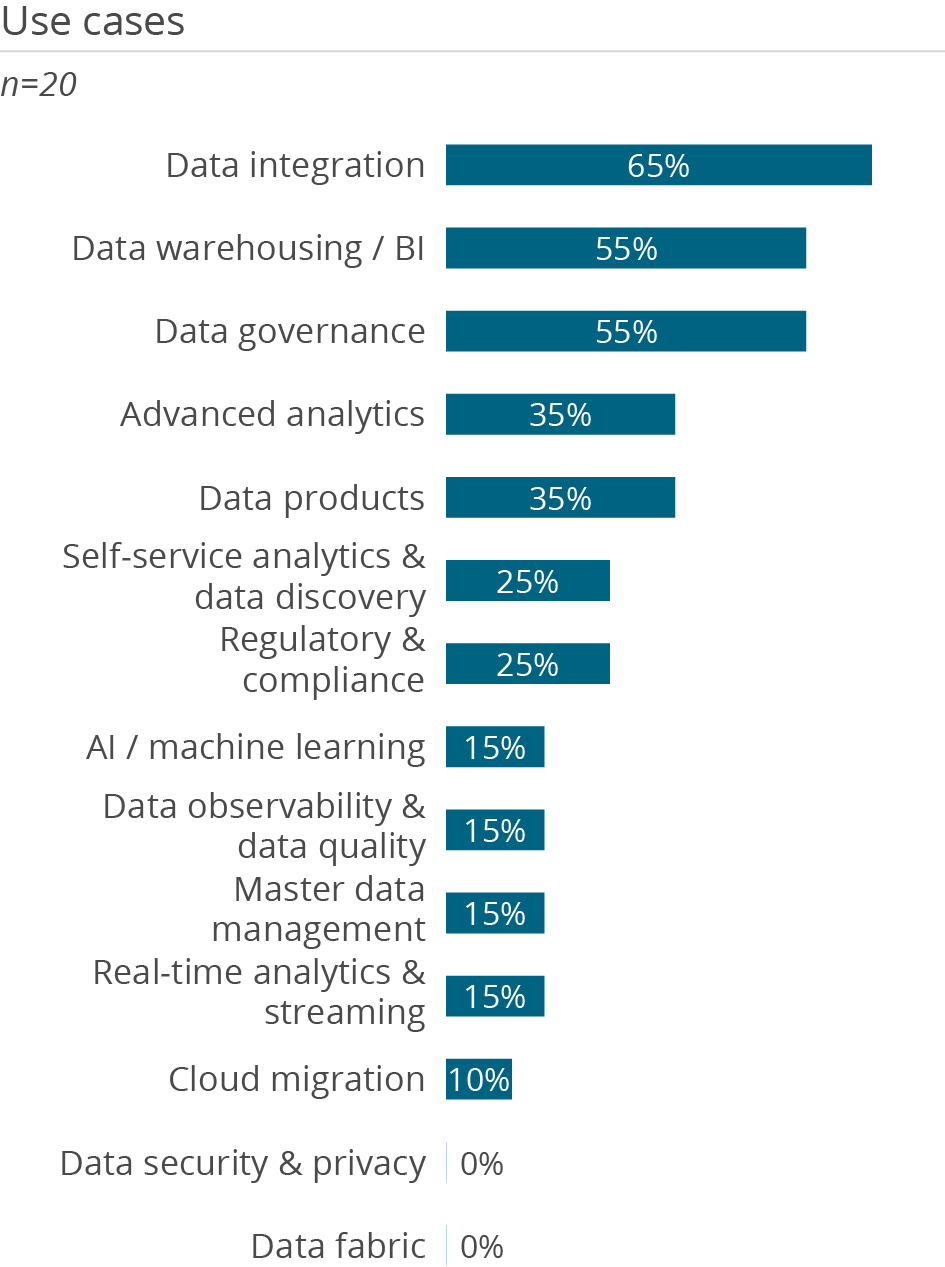
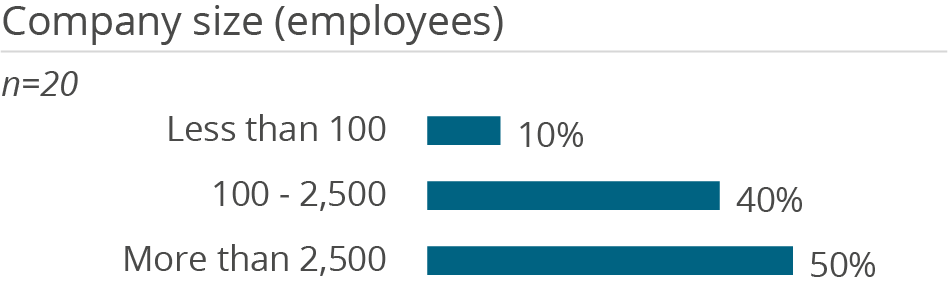
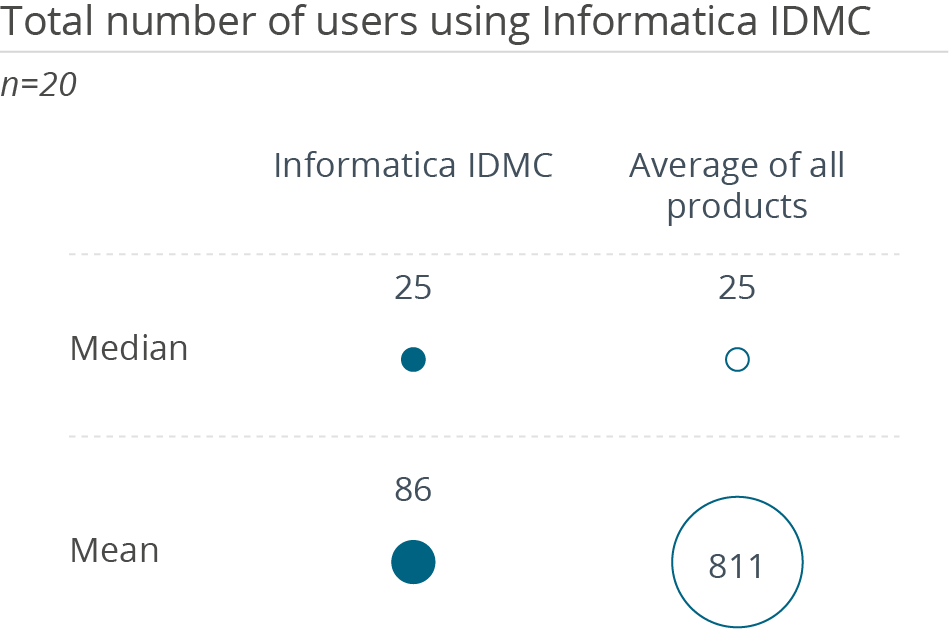
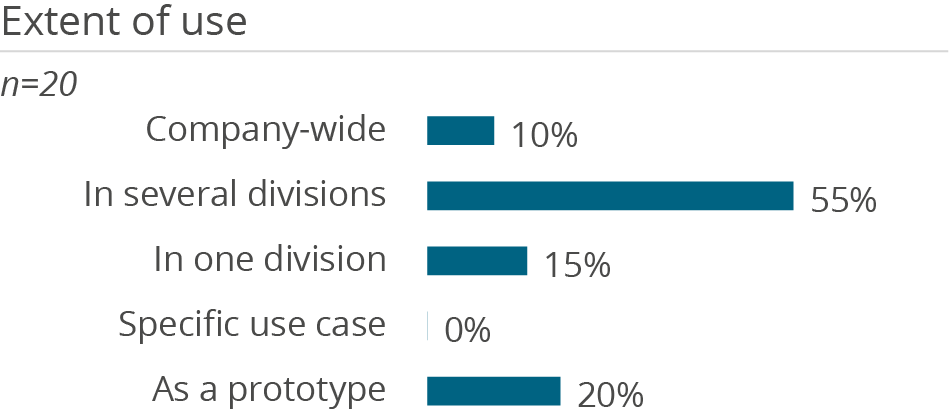
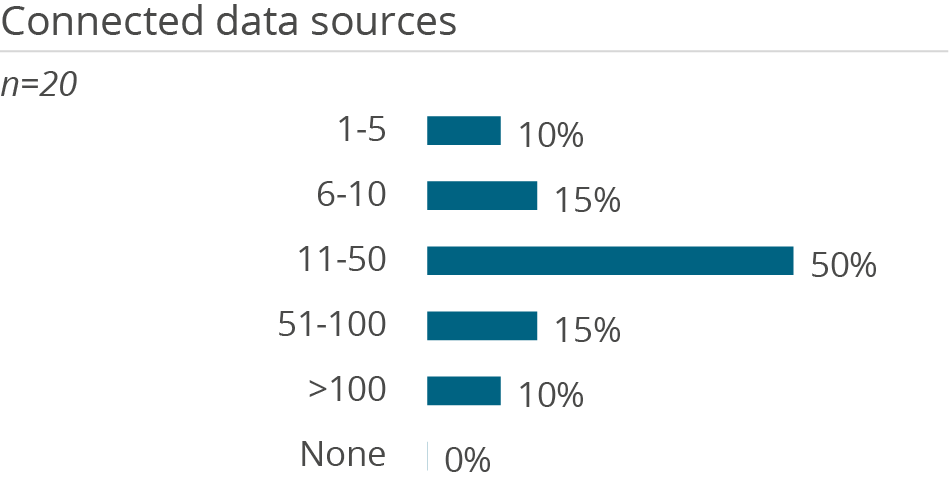
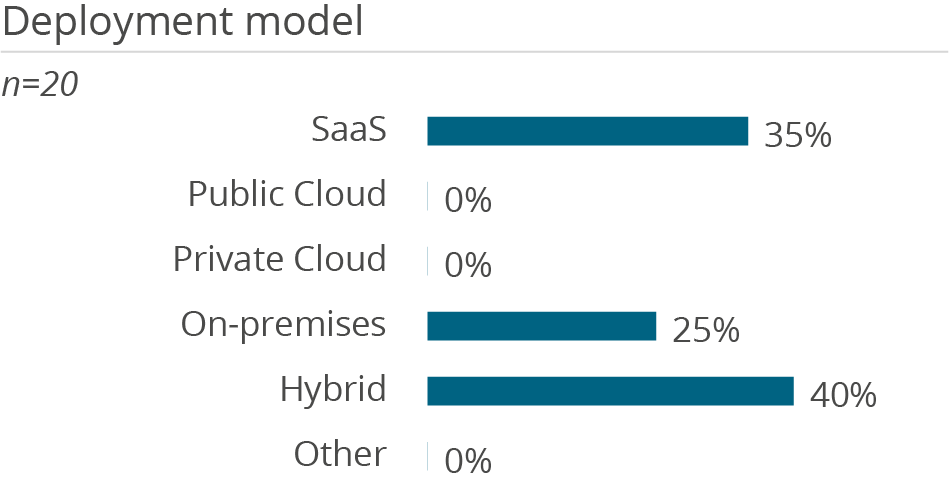
Who uses Informatica Intelligent Data Management Cloud in a data management context and how
Why users buy Informatica Intelligent Data Management Cloud and what problems they have using it


Premium content. Unlock with BARC+.
For just €79 per month (€948 per year) you can access all the paid content on www.barc.com.
Your benefits:
- Get independent information on software solutions, market developments and trends in data, analytics, business intelligence, data science and corporate performance management.
- Make data & analytics decisions based on numbers, data, facts and expert knowledge
- Access to all premium articles and all our research, including all software comparison studies, scores and surveys.
- Unlimited access to the BARC media library
- Consume unlimited content anywhere
Full user reviews and KPI results for Informatica Intelligent Data Management Cloud
All key figures for Informatica Intelligent Data Management Cloud at a glance.

Premium content. Unlock with BARC+.
For just €79 per month (€948 per year) you can access all the paid content on www.barc.com.
Your benefits:
- Get independent information on software solutions, market developments and trends in data, analytics, business intelligence, data science and corporate performance management.
- Make data & analytics decisions based on numbers, data, facts and expert knowledge
- Access to all premium articles and all our research, including all software comparison studies, scores and surveys.
- Unlimited access to the BARC media library
- Consume unlimited content anywhere
Individual user reviews for Informatica Intelligent Data Management Cloud

Role
Consultant
Number of employees
More than 2.500
Industry
Insurance
Source
BARC Marketing, Data Fabric 26, 04/2025
What do you like best?
Das Zusammenspiel von Metadatenmanagement, Datenqualitätsmanagement und Data Governance.
What do you like least/what could be improved?
Nicht gut geeignet für Anwender mit wenig bis keinem IT-Background.
What key advice would you give to other companies looking to introduce/use the product?
Genug Zeit für Datenschutz- und IT-Security-Anforderungen einplanen.
How would you sum up your experience?
–
Role
Project manager for planning from IT
Number of employees
More than 2.500
Industry
Utilities
Source
BARC Marketing, Data Fabric 26, 04/2025
What do you like best?
The ramp-up phase is relatively short. Low-code makes the software usable even for developers with limited experience in the tool. Users face a rather steep learning curve in the first weeks. It's a good solution for batch ingestion.
What do you like least/what could be improved?
It does not scale well, mainly due to limited code versioning functionality and, therefore, limited ability to work in parallel across distributed teams. The product roadmap is also rather vague, with no definite timelines provided. The licensing model is somewhat non-transparent and does not allow for detailed control, such as drilling down to single workflows and displaying the actual monetary costs. In certain cases, we need to run virtualized on-premises servers to operate Informatica’s Secure Agents, which we must scale ourselves.
What key advice would you give to other companies looking to introduce/use the product?
It is a good tool to start with if you have limited developer resources and want to get started quickly. Be aware that you only gain the promised benefits (metadata everywhere, connectivity) if you stay within the Informatica stack and do not rely on other tools for functions such as metadata management, data catalog, marketplace, or MDM.
How would you sum up your experience?
It is no longer fit for a modern data stack and, as a monolithic full-service software, poses the risk of significant vendor lock-in.
Role
Project manager for BI/analytics from IT
Number of employees
100 - 2.500
Industry
Telecommunications
Source
Invited by the vendor, The Data Management Survey 25, 03/2024
What do you like best?
Alle Data Governance-Funktionalitäten, die für uns als Unternehmen wichtig sind in einer Plattform (Data Catalog, Business Glossary, Market Place).
What do you like least/what could be improved?
Data Marketplace-Komponente könnte flexibler in der Anpassung sein (z.B. adaptivere Workflows & Interfaces zu Access Provisioning, Adaptierung des UIs speziell per Content Type). Kaskadieren von Informationen & Beschreibungen auf Objekt & Attribut-Ebene im Enterprise Data Catalog, wenn es eine klare Lineage gibt (um nicht dieselben Informationen an mehreren Stellen manuell übertragen zu müssen).
What key advice would you give to other companies looking to introduce/use the product?
In der Planungsphase ein klares Zielbild zu haben: Was soll erreicht werden? Wer soll wie davon profitieren? Ist es eine Sammlung an allen Systemen und (Meta-) Daten in einem Repository? Ist es die Übersicht bzw. Data Lineage von Reporting Content im Unternehmen? Je nachdem ergeben sich unterschiedliche Schwerpunkte in der Implementierung (vor allem in den ersten Phasen).
How would you sum up your experience?
-
Role
Enterprise architect
Number of employees
More than 2.500
Industry
Insurance
Source
Invited by the vendor, The Data Management Survey 25, 03/2024
What do you like best?
Multiple services integration in one platform.
What do you like least/what could be improved?
Connectivity and cost.
What key advice would you give to other companies looking to introduce/use the product?
Best in the market.
How would you sum up your experience?
Used it for several years and very satisfied.
Role
Enterprise architect
Number of employees
More than 2.500
Industry
Utilities
Source
Invited by the vendor, The Data Management Survey 25, 04/2024
What do you like best?
It's a single data platform with interconnected products, and it leverages this integration to provide better value.
What do you like least/what could be improved?
Complex pricing model.
What key advice would you give to other companies looking to introduce/use the product?
Only select the modules you'll actually use.
How would you sum up your experience?
One stop shop for all needs.
Survey Information
Number of reviews for Informatica Intelligent Data Management Cloud
20
Reviewed versions
Peer groups in the survey
Data Engineering Tools, Data Engineering (Big Players), ETL Tools, Data Intelligence Platforms (Big Players)