Microsoft, headquartered in Redmond, Washington, is one of the world’s largest software companies by market capitalization. Founded in 1975, it has expanded globally with more than 175 regional offices. Known for Windows and Microsoft Office, the company has diversified into enterprise software, cloud solutions, and AI/ML technologies. Its strategic focus on cloud services, particularly Azure, underpins its leadership in the market. Microsoft is investing heavily in generative AI, including large‑scale model training and a strategic partnership with OpenAI, to differentiate itself in a dynamic landscape.
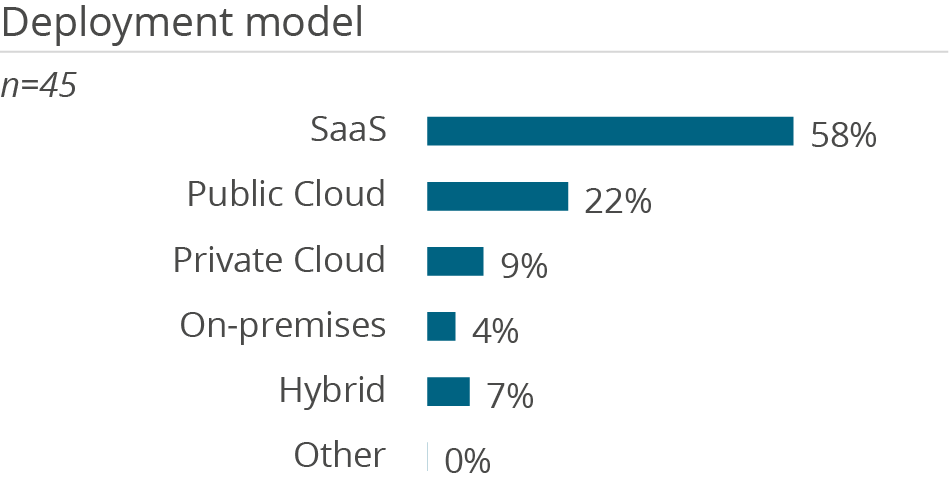
Microsoft positions Fabric – launched in 2023 – as a unified, SaaS analytics platform that consolidates data integration, storage, governance, analytics, and business intelligence in a single environment. The product is built around OneLake, a logical Delta Lake–based data lake on ADLS Gen2 that enables zero‑copy access for role‑specific “experiences” such as Data Engineering, Lakehouse, Data Warehouse, Power BI, Real‑Time Intelligence and the IQ semantic layer.
Recent investments emphasize AI and developer productivity: Copilot integrations across experiences, Fabric Data Agent support in Copilot Studio, notebook inline code completion, Git/CI‑CD lifecycle capabilities, materialized lake views, and improved interoperability including Delta Change Data Feed replication, mirroring from Snowflake and BigQuery, and Apache Iceberg access. Deep Purview integration and a centralized OneLake catalog strengthen governance and compliance across the estate.
Customers choose Fabric primarily because of its connectivity and fit with their technology landscape, its scalability, and the familiarity of Microsoft as a vendor. The survey shows connectivity to source and target systems as the top reason for purchase. Respondents also cited Fabric’s natural alignment with Azure and Power BI as a decisive factor, particularly for organizations already invested in Microsoft tooling. Scalability and improved performance were frequently mentioned in customer feedback, and nearly half of buyers reported an existing relationship with Microsoft as a material influence on selection – 42% versus a peer average of 26%. Business users also rate Fabric favorably for usability: 42% of respondents highlighted good usability compared with a 26% average, a result that reflects Power BI integration and the emerging Copilot experience for non‑technical users.
Pain points reported by users center less on the platform’s raw capabilities and more on people, processes, and economics. A substantial share of respondents (37%, versus a 19% average) reported lack of know‑how as a blocker to full value realization, underscoring the need for structured enablement, skilled platform teams, and partner support. Several customers also highlighted complexity in administration and operations: the breadth of Fabric’s capabilities can increase the operational surface and requires dedicated operational practices. Qualitative feedback additionally pointed to perceived complexity in pricing and difficulties in predicting total cost of ownership as an area for clearer vendor guidance.
Compared with last year, Fabric shows clear and measurable progress across major KPIs. Business Value increased from 5.5 to 6.7 on the survey scale. Within that category, the Business Benefits measure rose from 4.1 to 6.4, indicating stronger realization of outcomes. Customer Satisfaction climbed from 6.3 to 7.3, with Recommendation showing a particularly large jump from 1.7 to 7.7, an important signal of improved advocacy. User Experience improved from 6.0 to 7.0, driven by gains in Functional Coverage and Ease of Use. The Technical Foundation rose from 6.6 to 7.2, Performance moved from 4.9 to 6.8, and Platform Reliability from 4.8 to 7.3, reflecting significant platform hardening and engineering attention.
Microsoft Fabric has transitioned from an ambitious integration concept to a maturing enterprise platform that is translating investment into customer outcomes. The combination of OneLake, open formats, and improved replication/mirroring capabilities has materially improved interoperability and performance, which customers now reflect in better technical and user experience scores. Simultaneously, the rapid rollout of AI and productivity features – such as Copilot integration, Data Agents, and notebook assistance – has lowered friction for analytics teams and accelerated delivery cycles, contributing to the marked uplift in Recommendation and overall Customer Satisfaction.
For organizations already embedded in the Microsoft ecosystem, Fabric is particularly compelling: it offers good connectivity to Microsoft services, a strong native fit with Azure and Power BI, and a clear path to consolidate multiple analytics functions within a single SaaS environment. These attributes make Fabric a pragmatic choice for enterprises seeking to simplify their stacks and scale analytics projects. That said, prospective buyers should plan deliberately for people and operational readiness: the survey demonstrates that lack of internal know‑how and administrative complexity are the principal barriers to success. Clear enablement programs, partner implementations, and governance frameworks will materially increase the chances of realizing Fabric’s potential. Buyers with strict multi‑cloud neutrality requirements or tight budget predictability needs should evaluate cross‑cloud strategy and cost scenarios carefully; Microsoft’s open‑format steps mitigate but do not entirely remove these considerations.
Overall, Microsoft Fabric is a fast‑improving, enterprise‑grade data platform that delivers notable strengths in connectivity, ecosystem fit, usability for business users, and an increasingly robust technical foundation. Its recent KPI gains show the platform is maturing in ways that matter to customers; capturing the full benefit will depend on investment in skills, governance, and predictable cost management.